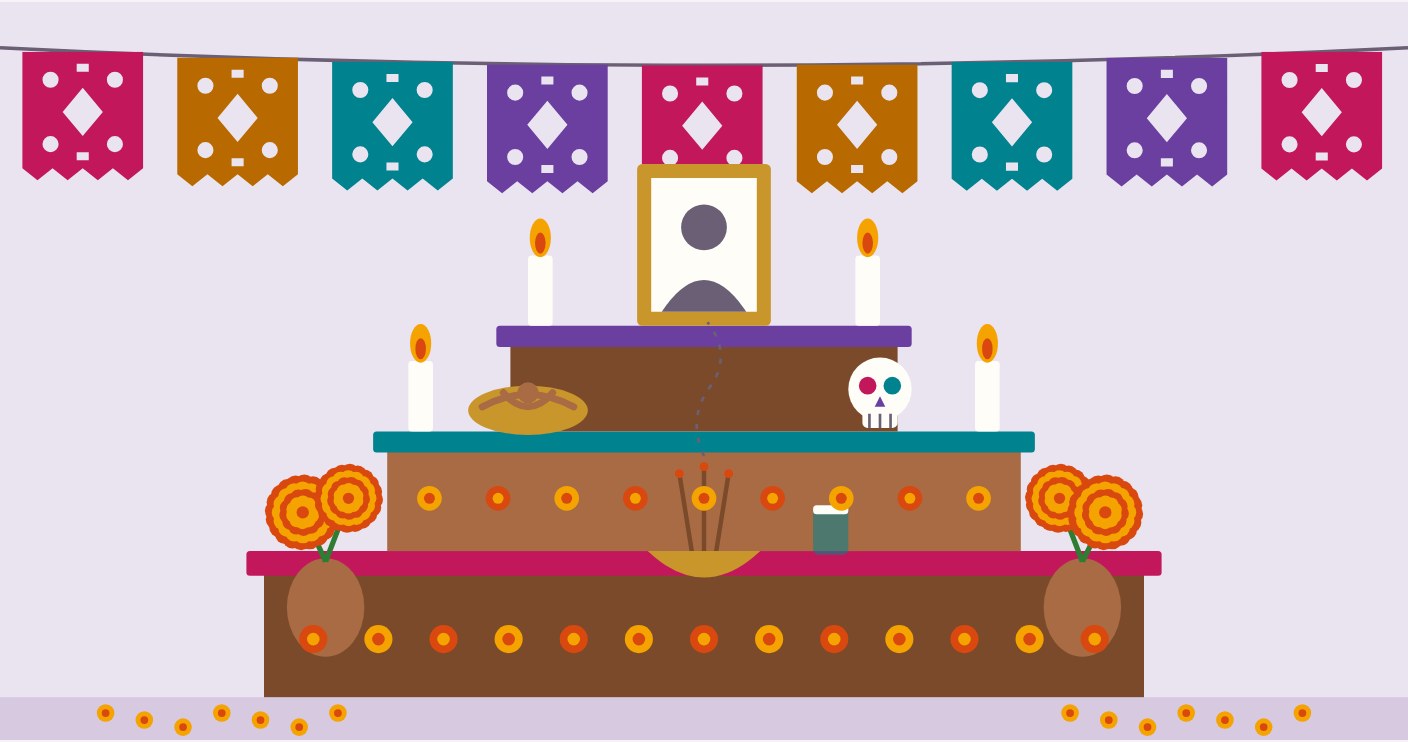
Every November 1st and 2nd, millions of families in Mexico and throughout Latin America set up altars, light candles and await the visit of their deceased loved ones. For those of us living in Thailand, the date might feel distant… until you discover that here too it is believed that the dead return, that they must be fed, and that they are welcomed with yellow flowers.
Day of the Dead in a nutshell
Day of the Dead is not a sad day. It is a celebration of reunion: it is believed that the souls of the deceased return for one night to spend time with their family. To welcome them, an altar or offering is set up with their photo, their favorite food and drink, bread of the dead, sugar skulls, papel picado, candles, copal and, above all, marigold flowers, whose color and aroma guide the path of return. In 2008, UNESCO inscribed the celebration as Intangible Cultural Heritage of Humanity.
Sart Duean Sip: the month when spirits come out to eat
In southern Thailand, especially in Nakhon Si Thammarat, Sart Duean Sip is celebrated (the festival of the tenth lunar month, usually between September and October). According to tradition, ancestors who did not achieve a good rebirth, the pret (hungry spirits), are released during this period to visit their families.
Families prepare trays of traditional sweets, each with a meaning, and take them to the temple to make merit in the name of their dead. At the end, the ching pret is celebrated: people "snatch" the offerings left for the spirits, because it is said that eating what the ancestors touched brings good fortune.
The parallel: just as in the offering, food is the bridge between the living and the dead, and after the deceased "take" the essence, the living share what remains.
Bun Khao Pradap Din and Bun Khao Sak: banquets for ancestors in Isan
In the northeast (Isan) there are two sister festivals of the lunar calendar. In Bun Khao Pradap Din, during the ninth lunar month, families wrap rice, sweets, tobacco and betel nut in banana leaves and leave them before dawn around the temple for the spirits of relatives. A month later, in Bun Khao Sak, similar offerings are made and the names of the deceased are written to dedicate the merit to them.
The parallel: leaving the deceased's favorite food, at dawn and in a special place, is practically the logic of the Mexican offering.
Phi Ta Khon: the ghost festival with masks
If Day of the Dead has La Catrina, Thailand has Phi Ta Khon. In Dan Sai, Loei province, a festival is celebrated every year (usually between June and July) where people dress up as ghosts with enormous masks made from the base of coconut palms and rice baskets, painted with intense colors. They dance through the streets, play pranks and celebrate with music.
The parallel: as in the parades and processions of Day of the Dead, death becomes a party, color and humor, not something to fear.
Yellow flowers: the marigold also lives here
One of the most beautiful details for a Latino in Thailand: the marigold flower, native to Mexico, is here one of the most common. It is called dao rueang and is found in garlands, offerings in temples and in the little spirit houses in front of houses and businesses. The same flower that guides our dead accompanies the offerings of the Thai people.
Houses for spirits and daily offerings
In Thailand, almost every building has a san phra phum, a small spirit house where water, food, incense and garlands are left daily. Additionally, many families keep the ashes of their loved ones in temples and visit them on important dates.
The parallel: the altar is not just for November; in many Latino homes, just as here, the relationship with ancestors is daily.
What unites us
Although one tradition is born from Catholicism mixed with pre-Hispanic beliefs and the other from Theravada Buddhism and animism, both share profound ideas: the dead do not leave completely, food and flowers are the way to care for them, and remembering them is a reason for community, not just mourning.
Do you celebrate Day of the Dead in Thailand?
This November, set up your offering with marigolds from the Pak Khlong Talat flower market, invite Thai friends and tell them who you remember. They will probably respond with a story of their own ancestors.
Share with the Latino community in Thailand how you celebrate: photos of your altar, where you get bread of the dead in Bangkok or what local traditions you have discovered.
Updated October 2026 · General information, not legal advice.